What Is News Automation? The Complete Guide to AI News Content
News automation uses AI to turn stories into ready-to-post images, carousels, reels, and captions. Learn how it works, what to automate, and how editors stay in control.
Guides, comparisons, and playbooks on AI journalism, automated publishing, newsroom workflows, and digital media growth.
37 articles

News automation uses AI to turn stories into ready-to-post images, carousels, reels, and captions. Learn how it works, what to automate, and how editors stay in control.

Step-by-step guide on setting up automated news publishing workflows across Facebook, Instagram, X, and LinkedIn without losing brand voice or editorial quality.

A comprehensive comparison between traditional manual newsroom publishing workflows and automated news operations, covering speed, resource allocation, and reach.

Explore how natural language processing and semantic story clustering help publishers filter feed noise, group related coverage, and break developing stories faster.

A comprehensive guide for editorial leaders on designing news-to-social automation workflows that maximize publishing velocity while safeguarding journalistic integrity.

HyperFast News vs Renderforest, HeyGen, InVideo, and ElevenLabs AI news generators — a clear, long comparison of news discovery, creation formats, social publishing, and why HyperFast is the best all-round choice for newsrooms in 2026.

HyperFast vs Wati compared in plain English: WhatsApp Business API inbox, broadcasts, and chatbots versus a full create → publish → engage platform — with a clear table and who should pick which.

HyperFast vs Buffer vs Hootsuite compared for scheduling, AI content, team workflows, WhatsApp, analytics, and India-ready growth — when a unified AI platform beats classic social suites.

A plain-English guide to news automation workflows in 2026 — discover stories, create posts with AI, publish everywhere, and keep editors in control with HyperFast News.

Manual news publishing vs AI news automation — a clear, simple comparison of speed, cost, quality control, and when HyperFast News makes sense for your team.

A practical roundup of AI business tools for content, social publishing, WhatsApp, and growth — including HyperFast, AiSensy, Buffer, Zoho Social, Canva, and Interakt — with a side-by-side comparison table.

HyperFast vs AiSensy compared in depth: WhatsApp automation, content creation, multi-channel publishing, pricing model, Meta Tech Provider status, and who should pick which platform.

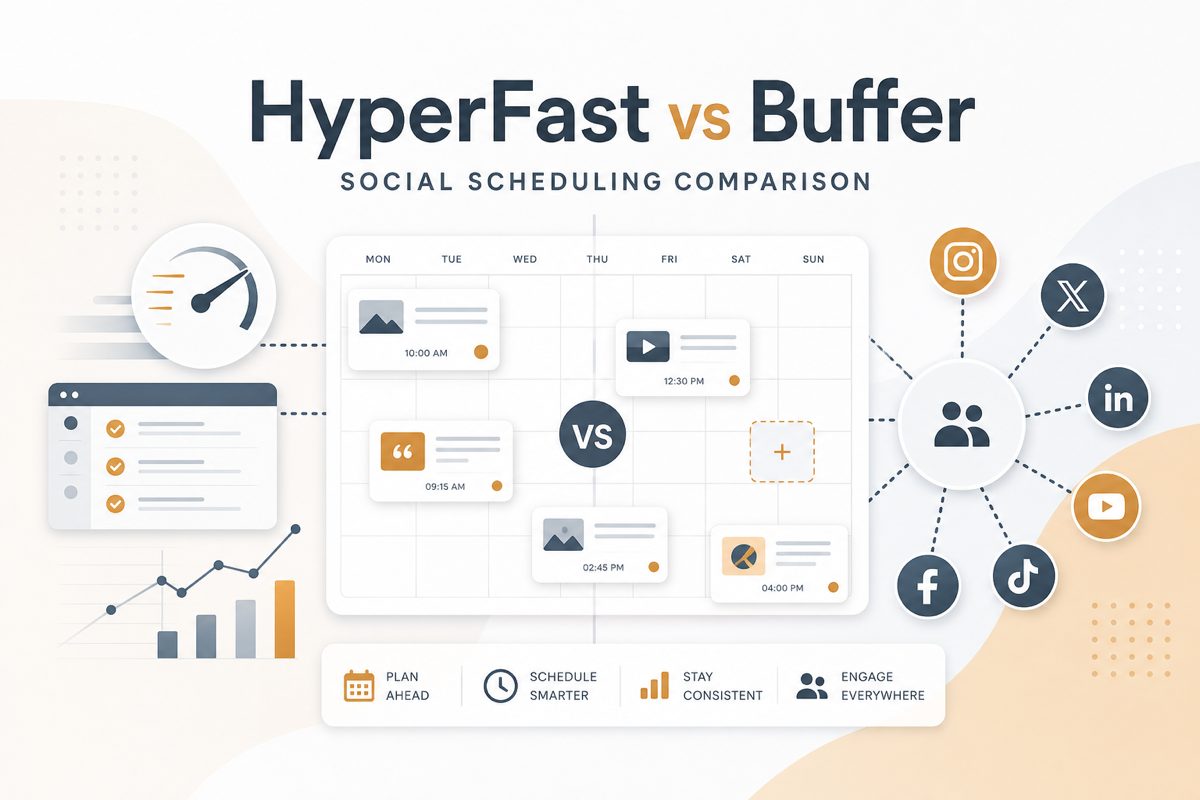
HyperFast vs Buffer in a real head-to-head: social scheduling, AI content creation, WhatsApp, analytics, pricing, and when a full platform beats a pure scheduler.

HyperFast vs Zoho Social compared for publishing, monitoring, AI content, WhatsApp, CRM handoff, suite lock-in, and which gravity fits your stack.

HyperFast vs Canva: when you need a design suite versus an AI platform that creates, publishes, and engages — with a clear comparison table and dual-use patterns.

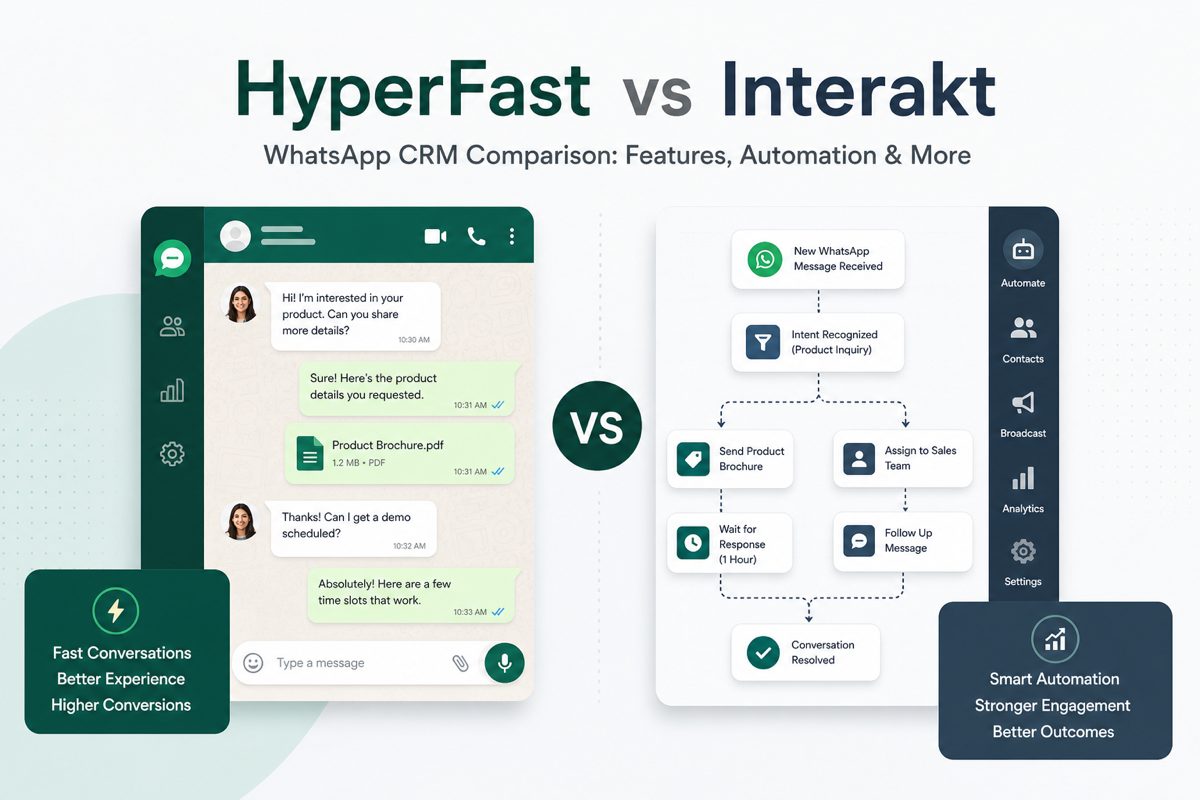
HyperFast vs Interakt in plain English: WhatsApp CRM and chatbots versus a full stack — News, AI Studio, Publish, Connect, Commerce, and Sites — with a clear table and who should pick which.

AiSensy vs HyperFast vs Interakt — a three-way comparison of WhatsApp automation, CRM, content creation, publishing, pricing, and which platform fits Indian growth teams.

AI is now part of daily work in many newsrooms — not as a replacement for reporters, but as a helper that speeds up research, drafting, and distribution. This guide walks through what is actually changing on the ground and how teams can adopt tools without losing editorial control.

Journalists in 2026 use AI for transcription, research summaries, visuals, and distribution — not to skip reporting, but to get to the real work sooner. Here are the tool categories worth knowing and how to pick what fits your beat.

AI can tighten headlines, check grammar, and route stories faster than any human — but it cannot replace the judgment that decides what to publish and what to leave out. This piece explains where automation helps editors and where humans stay essential.

Automated publishing moves a story from draft to website, search, and social in minutes instead of hours — which changes how digital media teams allocate people and what readers expect. Here is how the pipeline works and what to watch for.

Your best reporting deserves more than a single link drop on social media. AI repurposing turns one verified article into platform-ready posts, threads, and visuals — so small teams can show up everywhere without rewriting from scratch.

News sites need social tools that react to breaking stories, not just schedule promo posts weeks ahead. This guide compares what to look for in automation platforms and how news-specific workflows differ from brand marketing.

Cross-platform scheduling for news is not about blasting the same post everywhere — it is about timing, format, and variation so each channel gets what works best. Here is a step-by-step setup that scales.

Manual distribution cannot keep up with how fragmented news consumption has become. Automated distribution gets verified stories to search, social, apps, and email fast — which is now baseline expectations, not a nice extra.

Virality is not luck — it is framing, timing, and follow-up on social while the story is still moving. Smart publishing strategies help serious news travel without turning into clickbait.

Fixed posting times leave traffic on the table. AI scheduling learns when your audience actually engages with different story types and spaces posts accordingly — here is how to use it without handing full control to an algorithm.

News SEO is a race against the clock — most traffic arrives in the first hours after publish. These technical and editorial practices help stories show up in Top Stories and standard results while they still matter.

Paid traffic stops when the budget stops — organic channels compound over time. News portals can grow sustainably through search, Discover, email, social referrals, and community presence without relying on ads.

Google Discover sends huge mobile traffic to news sites that match user interests — but the feed rewards different signals than traditional search. This guide covers images, headlines, authority, and technical requirements.

Stories can appear in Google within minutes of publish — but only if your site sends the right signals. Here is how real-time indexing works and what news sites should configure behind the scenes.

Media companies sell trust and habit as much as individual stories. Content marketing for publishers means showing why your reporting is worth following — across social, email, events, and partnerships.

Media teams lose hours to transcription, resizing, social formatting, and manual scheduling — tasks AI handles well when workflows are set up correctly. Here is where the time actually goes back on the clock.

A smart newsroom pipeline moves stories from signal to published article to distributed social assets with clear human checkpoints. This step-by-step guide is for teams building that flow from scratch in 2026.

Your website is one channel among many — apps, email, social, audio, and messaging all need the same story in different shapes. Efficient multi-channel distribution starts with one hub and clear remapping rules.

Traditional manual publishing and AI-assisted workflows differ sharply on speed, cost per story, and reach — but the best operations combine automation for routine work with human depth for high-stakes reporting.

News is moving toward personalized feeds, conversational interfaces, and agents that filter noise — but public trust still depends on human reporters and transparent newsrooms. Here is a sober look at what is coming by 2030.
Resources and insights from the HyperFast News team.